
A Collection and the Idea of a Museum
This museum was the brainchild of industrialist and collector Gordon B. Lankton (1931–2020). In the early 1960s, the plastics engineer originally from Peoria, Illinois, went to work at Nypro, an injection molding plastics company in Clinton, Massachusetts. He eventually became its president.
In the early 1990s, Lankton established a large-scale joint manufacturing enterprise to produce plastic household goods in Moscow. One of the first US-Soviet business partnerships, this led the way for the introduction of free enterprise in Russia.
On one such business trip, he purchased his first icon at an open-air market. He was attracted to this small icon of Saint Nicholas, a type of icon used for private prayer because of its simplicity and sincerity.
He continued collecting for over 20 years, eventually opening a museum in Clinton to give back to the community that had supported his business. He donated his entire collection to establish the Museum of Russian Icons, to present his collection as an example of the soul of Russian culture to an American public.
A Museum and Center for Research
The Museum of Russian Icons was founded in 2006. Its campus began with the acquisition and renovation of a late 1800s building which had originally housed the executive offices of the Bigelow Textile Company, enhanced with the addition of a contemporary, aluminum-clad addition which housed the South Gallery, Library, and offices. Another historic building, the adjacent 150-year-old former courthouse and police station (with its jail cells intact), was renovated in 2010 to provide additional gallery space, a terrace with a green roof, and performance facilities to host lectures and concerts.
Lankton created the only museum in the United States solely dedicated to Russian icons, holding the largest collection of its kind in North America, and one of the largest private collections outside of Russia.
Important early exhibitions presented by Lankton and founding director Kent Russell included Two Museums/One Culture, featuring the works of the State Tretyakov Gallery in Moscow, and Treasures from Moscow: Icons from the Andrey Rublev Museum.
Lankton’s vision of establishing a world-class museum in Clinton was validated in 2016 when the Museum of Russian Icons, under the leadership of Russell, received accreditation by the American Alliance of Museums, an honor signifying that its operations were in full compliance with the highest standards of American museums.
The museum has attracted visitors from throughout the region and around the world, presents a lively slate of cultural and scholarly programs that contributes to the cultural life of its region, and is a major attraction of visitors to Clinton and Central Massachusetts.
The Center for Icon Studies at the Museum of Russian Icons was founded in 2012 to support research in iconology and iconography. The Center published the first edition of The Journal of Icon Studies in 2015. In 2021, the Center presented the virtual conference Collecting Orthodox Art in the West: A History and Look Towards the Future, and in 2022 The Visual Culture of Iconoclasm and Atheism.
A Brief History of the Icon Museum
1989
Founder’s First Visit to Russia

Gordon B. Lankton, president of Nypro Inc., visits Russia for the first time to establish a Soviet-USA joint venture in plastics manufacturing. During his trip, he visits an open-air market in Moscow where he purchases an image of Saint Nicholas, thus sparking his interest in icons and Russian culture.
2004
First Exhibition of the Collection

After amassing several hundred icons, Lankton opens a small exhibition within Nypro. That year, the Museum of Russian Icons is incorporated.
2006
Building a Green Museum with a Historic Facade

Lankton purchases the historic Bigelow Institute building, and construction begins on the main museum building. Durrant Design uses the most advanced green technologies and visitor service amenities available.
October 15, 2006
Grand Opening of the Museum

The Museum of Russian Icons opens, becoming the only museum in the United States solely dedicated to Russian icons. It is the largest collection of its kind in North America, and one of the largest private collections outside of Russia.
2008
First Expansion

The Museum is enhanced with a contemporary, aluminum-clad addition housing the South Gallery, library, and offices.
February 11, 2008
Blessing of the Museum

Father Alexander Abramov, rector of the St. Nicholas Patriarchal Cathedral in New York City, blesses the Museum. The service is held in the Main Gallery (now the Gordon B. Lankton Gallery), concluding with Father Abramov sprinkling holy water around the building and attaching symbols of the blessing on the four supporting walls of the Main Gallery.
October 16, 2008
Major Exhibition with the Treteyakov Gallery

Two Museums/One Culture opens, marking a special collaboration between a Russian and an American museum. The exhibition features icons from the State Tretyakov Gallery in Moscow.
2009
The Museum Travels Across the USA

Icons from the Museum of Russian Icons travel across the nation as part of the Windows to Heaven: Treasures from the Museum of Russian Icons traveling exhibition.
2010
Second Expansion

The Museum expands into the adjacent 150-year-old former courthouse and police station (with intact jail cells), which provide additional gallery space, a terrace with a green roof, and performance facilities to host lectures and concerts.
October 23, 2010
Exhibition with the Andrey Rublev Museum

The Treasures from Moscow: Icons from the Andrey Rublev Museum exhibition opens, making it the largest exhibition of Russian Icons ever assembled in the USA.
2015
Collection Milestone

The Museum’s collection reaches over 1,000 icons and artifacts.
2015
Journal of Icon Studies Launches
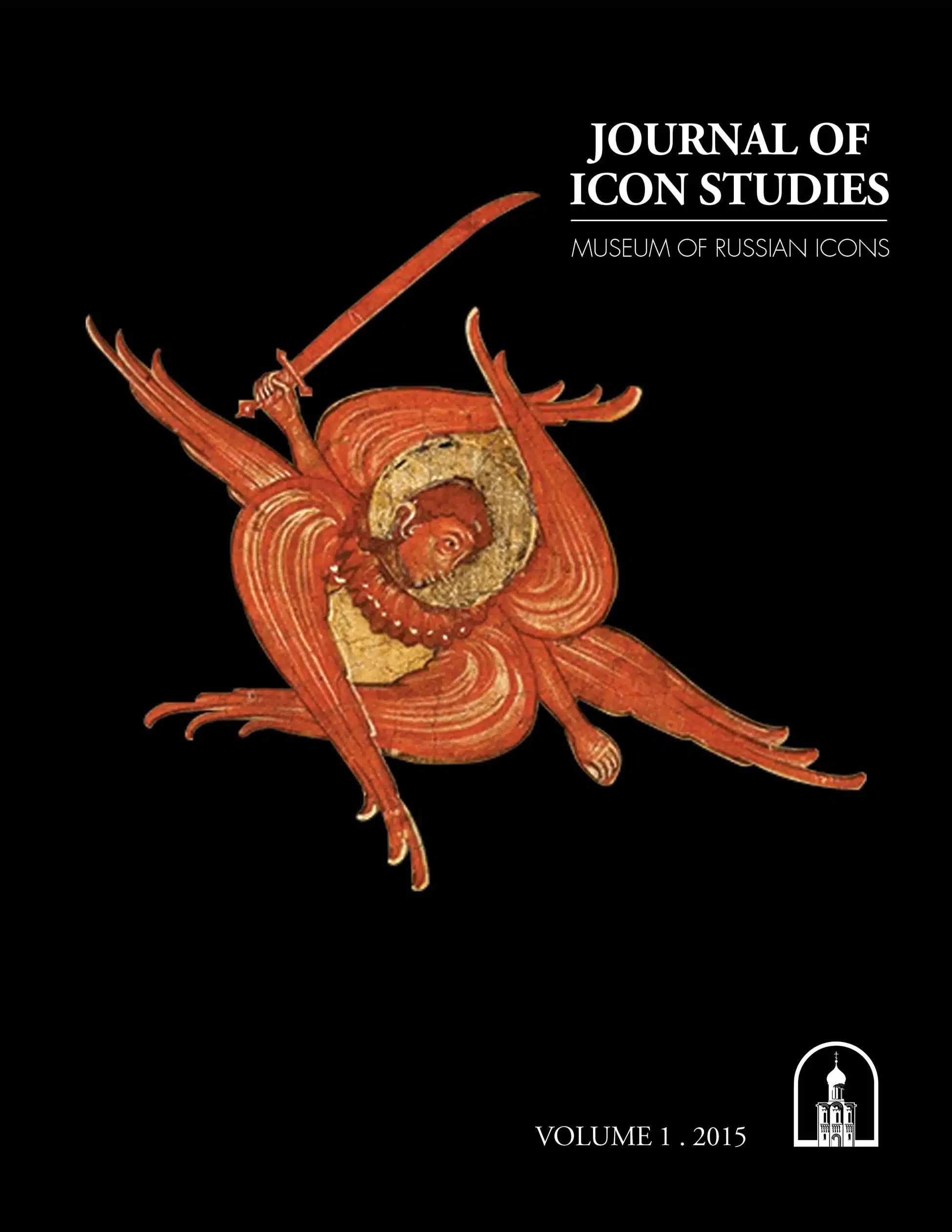
The Museum publishes the first volume of the Journal of Icon Studies following its international conference that attracted visitors from around the world to Clinton, MA, and presented a slate of cultural and scholarly programs.
May 2, 2015
Exhibition with the British Museum

The collaborative exhibition with the British Museum, Byzantium to Russia: Origins and Development of Russian Icon, 1200 to 1900, opens. It is the first time the British Museum has ever lent St. John the Baptist (Constantinople, c. 1300) and the famous St. George and the Dragon (known as “Black George,” Novgorod, late 14th century).
October 15, 2015
AAM Accreditation

The Museum becomes the youngest institution to receive accreditation from the American Alliance of Museums (AAM), a designation that signifies compliance with high operational standards.
October 2016
10th Anniversary

The Museum celebrates its 10th anniversary with an open house and special musical performances.
2020
AAM re-accreditation
The Museum is reaccredited by the American Alliance of Museums. This time, earning the standard 10 years before the next reaccreditation.
2021
15th Anniversary
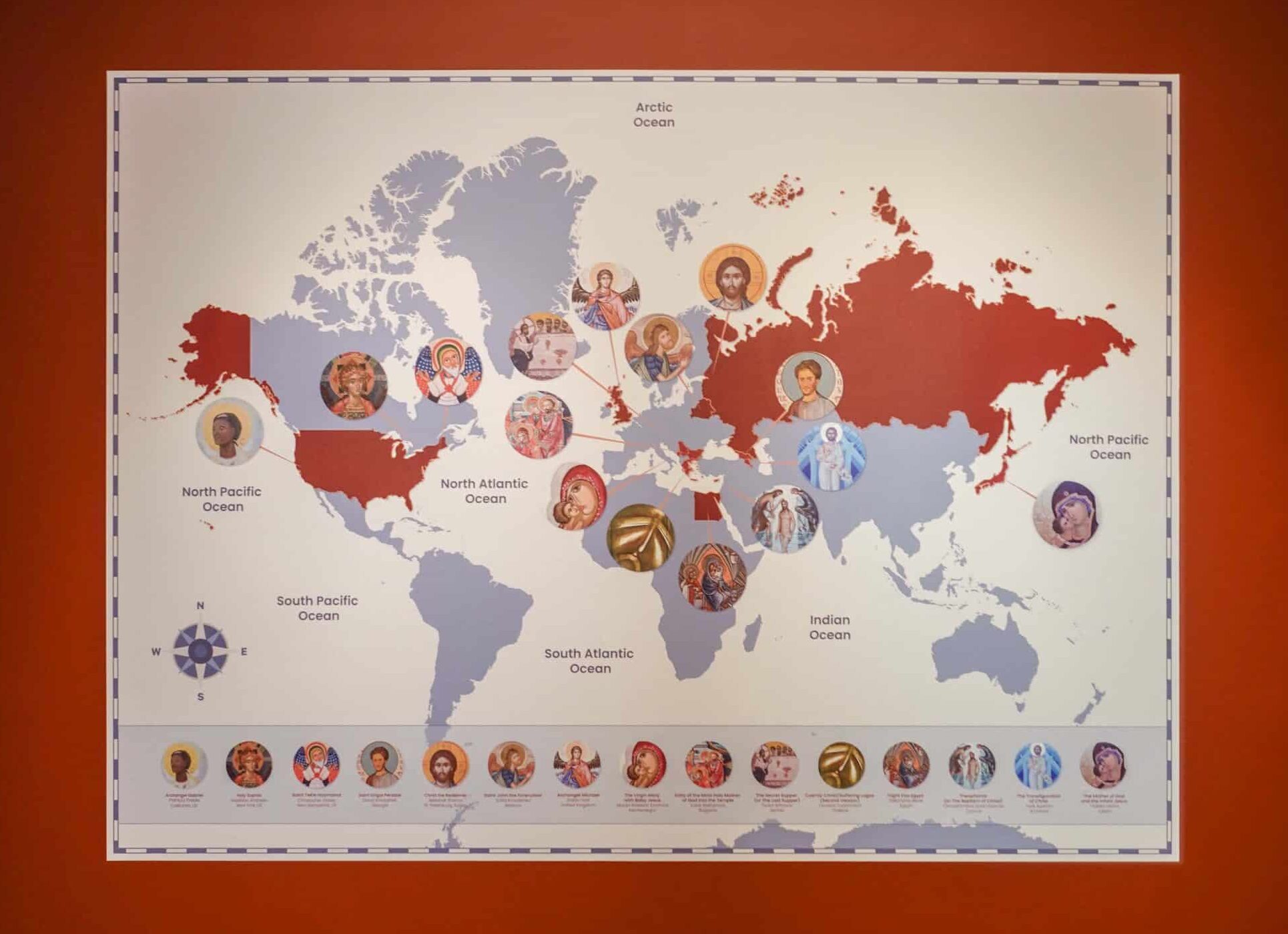
The Museum presents the Icons for Our Time: Orthodox Art from around the World exhibition, featuring 15 contemporary icons from 15 different countries, accompanied by the virtual conference Collecting Orthodox Art in the West: A History and Look Towards the Future.
2021
Creation of the Gordon B. Lankton Collection Fund

After Lankton’s passing, his family works with the Museum to establish the Gordon B. Lankton Collections Fund to ensure future growth and to secure his legacy.
2022
Founding Director Retires and New Director Hired

Founding Executive Director Kent Russell retires, and Simon Morsink, a Dutch art historian and icon expert, is hired as his successor.
October 14, 2023
New Brand Reveal
During a special celebration, Morsink and staff announce a new name – the Icon Museum and Study Center – emphasizing a revitalized mission to balance the organization’s focus on exhibition and scholarship, while expanding the collection to include sacred icons from a broader diversity of Eastern Christian cultures.
October 16, 2025
Greek Icon Gallery Opens

A new permanent gallery opens, featuring Greek icons from the Museum’s collection and loaned objects, including an important gift of two 16th-century panels attributed to Georgios Klontzas by Trustee, Ruah Donnelly.