Greek Icon Gallery
Permanent

Permanent
About the Installation
The story of Greek icon painting after the fall of Constantinople in 1453 offers a fascinating glimpse into the processes of innovation, artistic exchange, and continuity of Greek art and culture. Spread across a vast diaspora from Mount Athos to Venice, to Crete, to Western Anatolia, Greek icon styles provide insight into the dialogue between the new learning of the Renaissance and Orthodox religious ideals. As they fled the expanding Ottoman Empire, iconographers of Greek-trained workshops found work in the Venetian colony in Candia (Heraklion) on Crete and in the growing émigré communities in Venice and beyond.

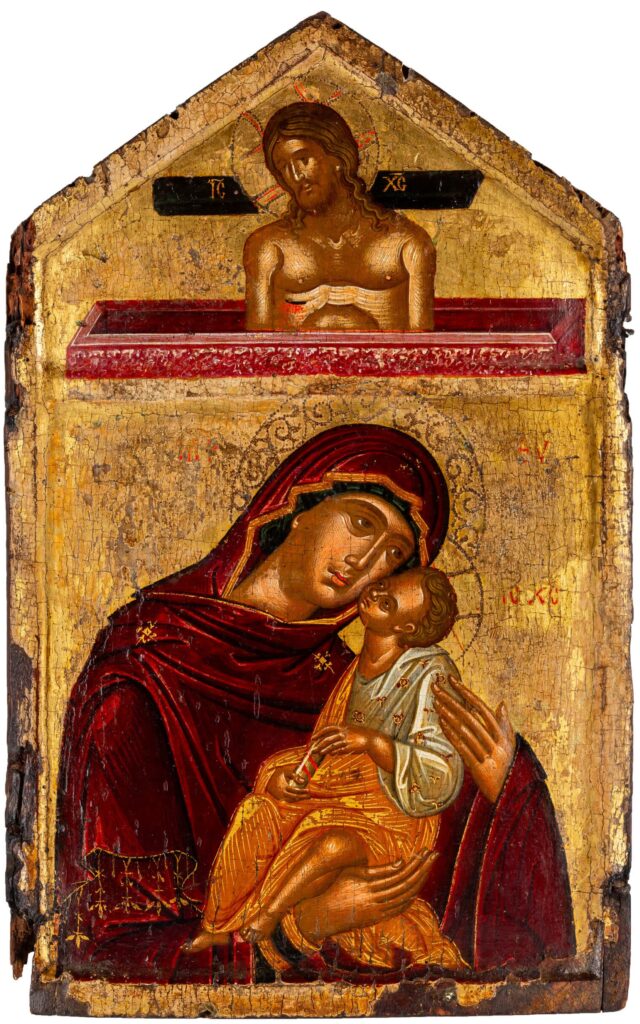

Greek icons showcase a remarkably broad range of European artistic movements, including Italianate classical styles and the grandeur of Baroque ornament. By studying European prints and the latest works of Venetian painters, Greek workshops combined a new appreciation for Western art with the spiritual forms of Byzantium. While their European contemporaries often saw icons as unchanging religious art, Greek workshops displayed a freedom of thought and a taste for intellectual pursuits.
The installation features icons from the Icon Museum’s permanent collection, the Museum of Fine Arts in Houston, Texas, as well as pieces from the private collection of Emmanuel and Argie Tiliakos, passionate collectors and experts in Greek icons.

Cretan workshops are well represented in this gallery, including two rare panels from a triptych by the sixteenth-century master, Georgios Klontzas.
Experience an extraordinary permanent exhibit highlighting rare icons and objects from private and public collections, including some that have not been displayed to the public in years.