Sacred Presence: Virgin of Kazan
March 22, 2024–August 25, 2024

March 22, 2024–August 25, 2024
Curated by Dennis Sardella and Simon Morsink
The Virgin of Kazan, believed to be a Byzantine icon, was mysteriously rediscovered in 1579 in the remote Muscovite empire. Over the centuries, it became one of the most beloved images in Russian culture and religious life.
The exhibit, guest curated by Dennis Sardella, explores the icon’s history and meaning. It examines its artistic style, spiritual journey, and beauty, as well as its use by political and religious figures throughout history.
The Kazan Mother of God (Kazanskaya Bogomater in Russian) is a highly revered icon, beloved by the people and hailed as a holy protectress. For centuries, people have turned to it for support and protection. The icon has a special place in people’s lives: couples were blessed with it before marriage, and it was hung by children’s cribs and in places of honor in homes. People also prayed before it during times of national peril. By the end of the nineteenth century, there were thousands of Kazan Mother of God icons in Russian homes.
The Icon Museum and Study Center is home to different examples of this beloved icon.
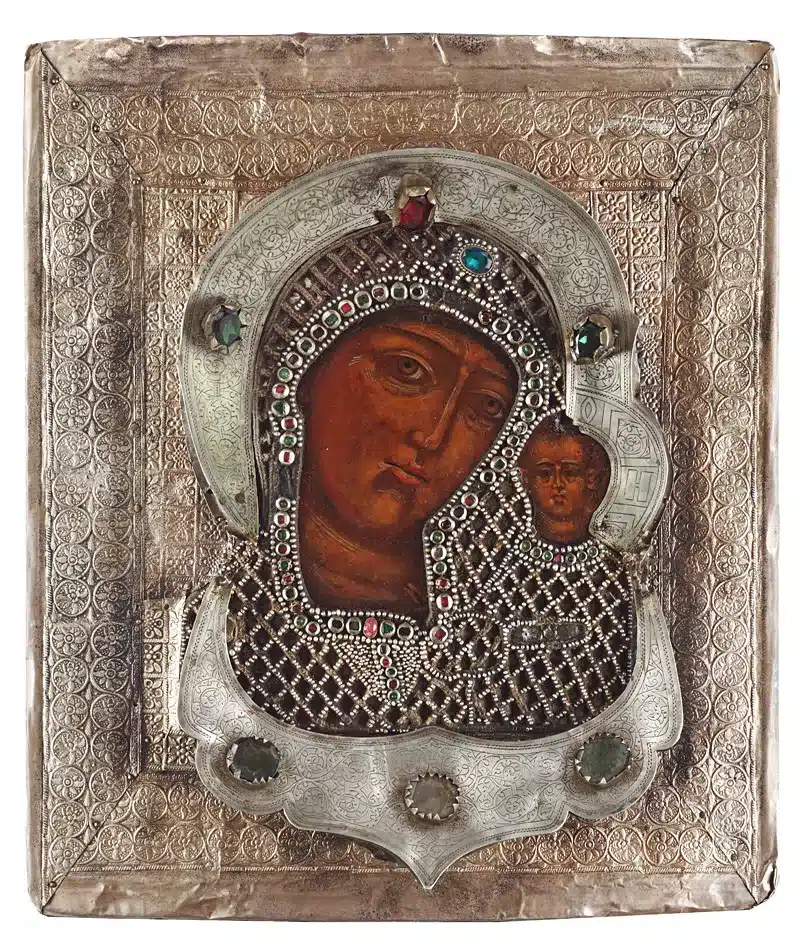
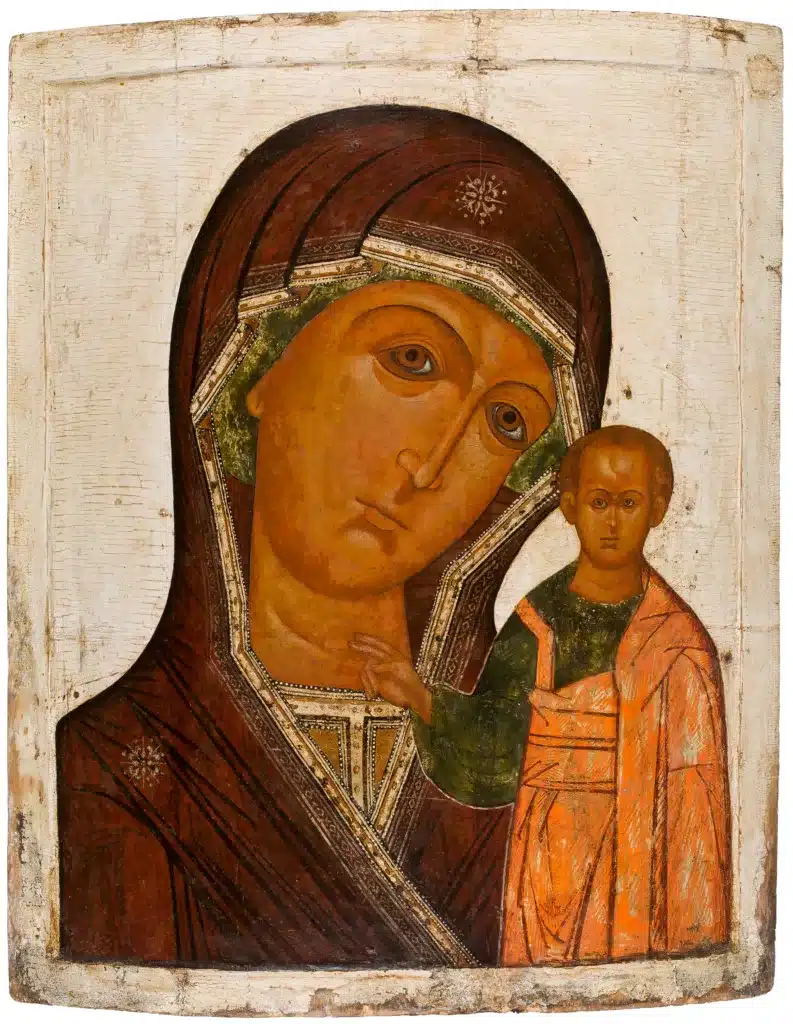

Sacred Presence: Virgin of Kazan tells the story of this image through the lens of a single seventeenth-century icon, which is one of the highlights in the Museum’s collection. This monumental icon, painted around 1650, dates to less than seventy-five years after the Kazanskaya cult of devotion was founded. The icon’s size, the iconographer’s warm color palette, and the imposing figure of the Mother of God, who is dressed in a purple mantle (maphorion), enables the panel to command the space around it, whereas the gentle melancholy of the Virgin’s gaze has an almost magnetic attraction.
Dennis J. Sardella, PhD has been a docent at the Museum for twelve years, where he leads gallery tours and introduces visitors to the world of Byzantine and Russian icons. He writes and speaks regularly to civic and church groups on the topics of religious icons and the role they play in Eastern Christian spirituality — at last count, nearly fifty presentations.
A professor of chemistry at Boston College for forty-five years, Sardella taught and researched the areas of spectroscopy and molecular structure. In 1990 he became the founding director of the Boston College Presidential Scholars Program, a university-wide co-curricular honors program, and directed it until 2010.