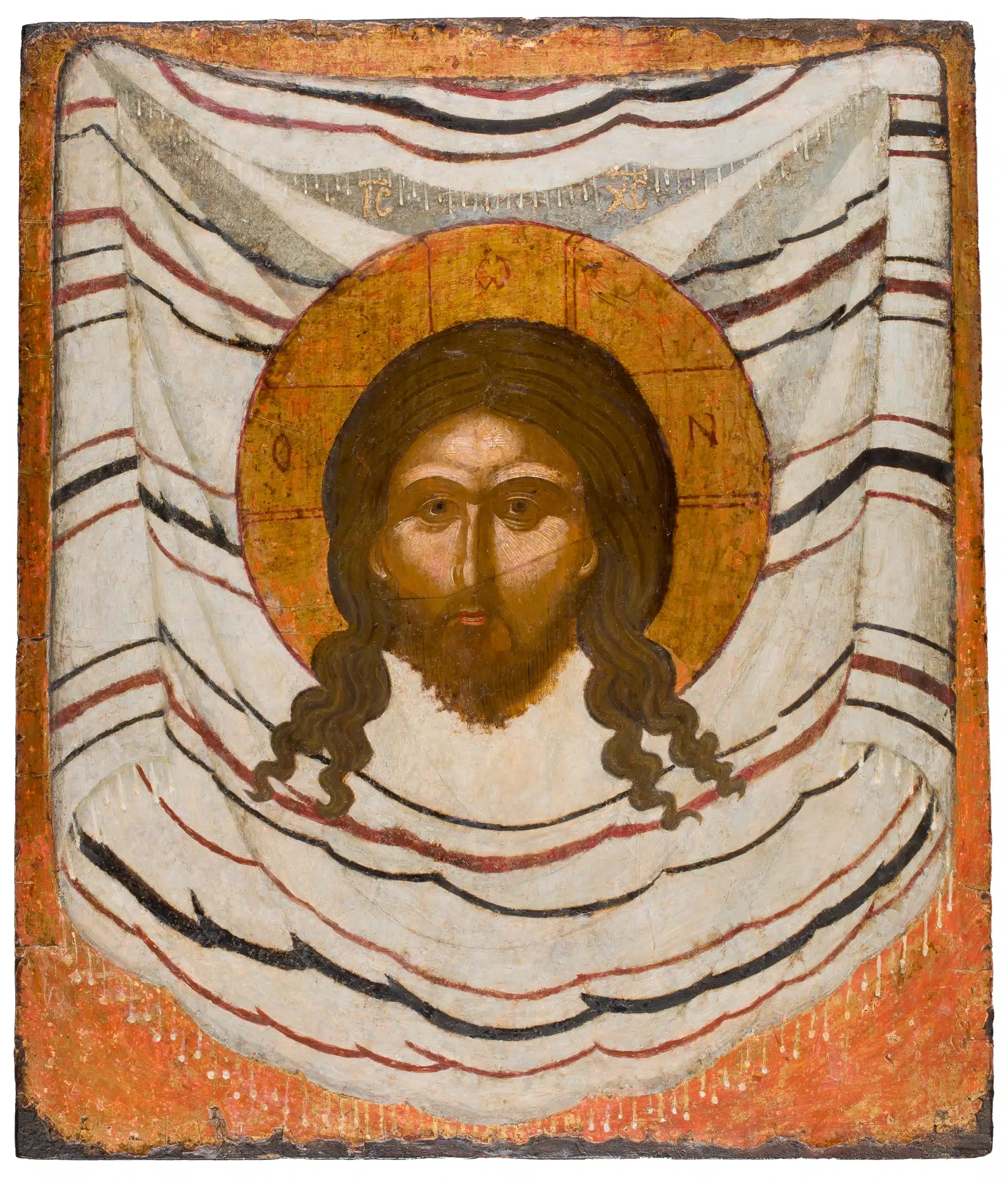
Christ stares serenely out at the beholder. His head seems to float above the surface of the tasseled white linen that frames his haloed head. This icon depicts the miraculous cloth with which Christ is believed to have pressed his face—known as the Mandylion (from the Greek word for cloth or towel).
According to tradition, King Abgar of Edessa, who suffered from leprosy, sent an emissary to invite Christ to his court, when he heard tell of the Lord’s healing miracles. Instead, the emissary returned with a towel onto which Christ had pressed his face and miraculously imprinted his divine likeness “not made by hands.” The treasured relic of Christ’s image on a cloth was celebrated for protecting the city of Edessa from siege, and in 944 the Byzantine emperor had it brought to the imperial capital of Constantinople where the icon would become one of the most venerated images in the Christian East.